How to Meld Your Backgrounds in Early Marriage
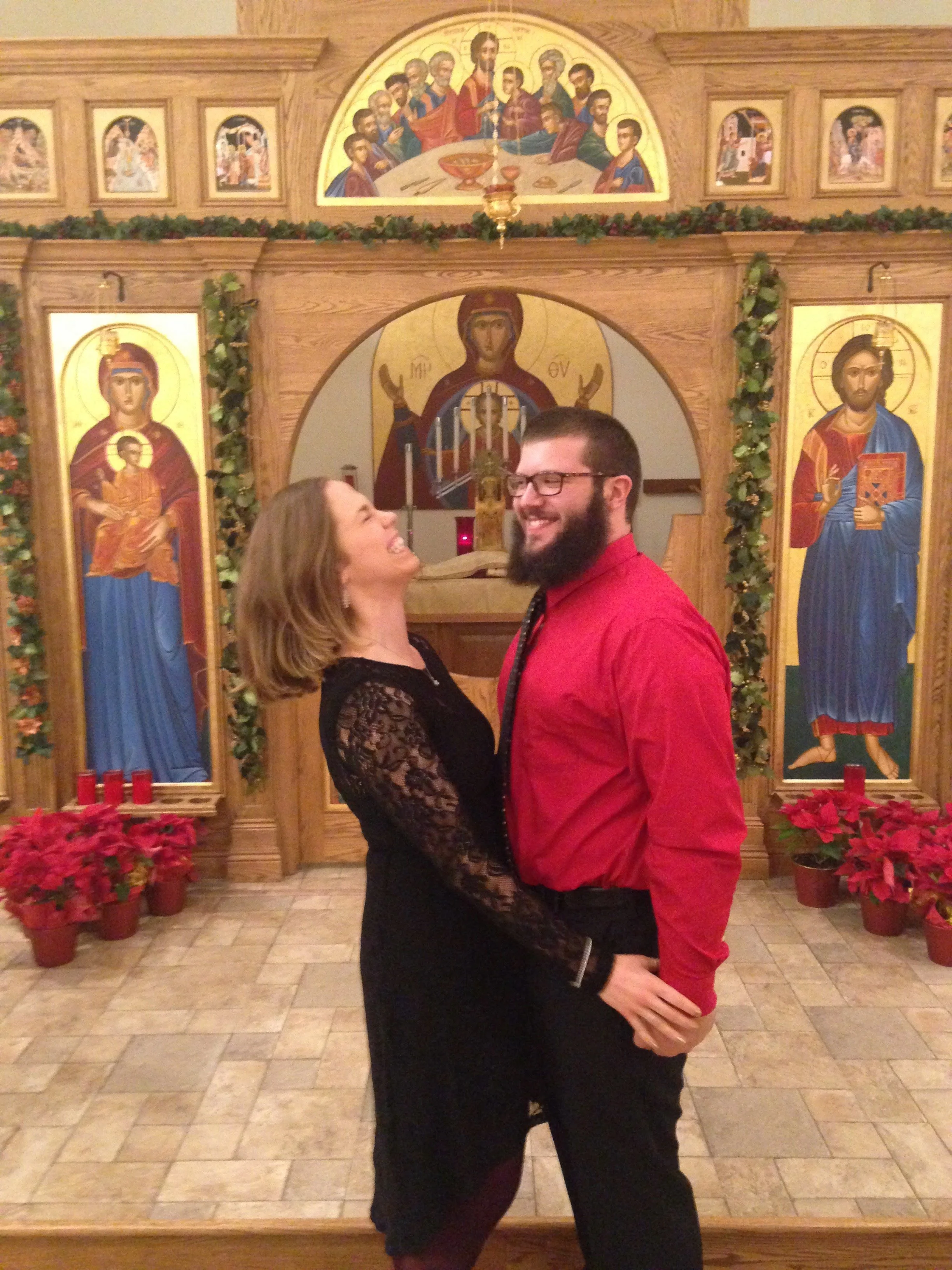
This article is taken from a talk I presented to a young married group in Texas. It lead to many fruitful questions and allowed the couples to openly discuss some of the struggles they face and understand they are not alone in their struggles. I pray you find this piece encouraging and edifying.
***
Today I want to talk about melding your lives, whether you’re engaged or married, respectfully, humbly, and cohesively. My husband and I have been married for almost 12 years, 12 years in May, and to be completely honest, I still feel like I’m an early married person! But, I guess that’s not the case since we’re expecting our fifth baby this summer.
Melding your backgrounds is essential to a healthy marriage. You simply can’t expect to throw away your upbringing and forget how you were raised. Every tradition and hardship, celebration and milestone contribute to who you are today.
But there are certainly good and bad ways to bring your life together. Whether your 20 years old and you’ve never lived on your own or you’re coming to marriage later in life and have lived as a single adult for over a decade, this article is for you.
May it be blessed.
My Husband and My Early Upbringings
To start, I want to tell you a little bit about my background because I think that will help you understand my point of view. And I will do my best to discuss my husband’s.
I am one of five children. My parents converted to the Orthodox Church in the 1990s. They are one of the few parishes that underwent a full parish conversion, but the Orthodox Church is all I’ve ever known. I was baptized when I was three, and after a few years in our first parish (where we all converted), my dad was given a new parish assignment about an hour from where we started. Oh yes, my dad was made a priest at the parish we all converted, but that’s a story for another day.
We moved to the desert, but it was that in more than one way. We had no community, no friends, no support, which is basically everything we just left. This move impacted my growing up because it cemented my life with my siblings and my parents as my soul support group. We had to lean on each other for everything because we were homeschooled at the time and had no other friends. Even our church was a young mission with only a few elderly couples.
But today, by the grace of God, we are all still in the Church. My two older sisters both married men who also became priests, my brother is a pastoral assistant and entering the diaconal program, and my little sister is faithfully in the church. Not only did we have a beautiful model of what it meant to live as Christians, but we had a stable model for marriage and what it means to persevere and meld your life together.
My parents came from entirely different backgrounds. My dad was a small-town farmer from Ohio with a mom and a dad who were madly in love. Whereas my mom was born and raised in California in a broken home with no model for a healthy marriage.
My husband is one of four children. He grew up all over the country. His dad was a carpenter looking for work, who turned Lutheran pastor. His parents have been married for almost 50 years! They’re a great image of marriage commitment and how to make it through hardship, but his dynamic as a sibling was very different because he was the youngest, and there was a large gap between him and his siblings, which didn’t lead to as close a bond as I have with mine.
This sibling dynamic has led to many discussions about how much time we spend with family, interpersonal relationships with siblings, and discerning how much time we spend with our families. Because I was so much closer to my siblings, I have a great relationship to this day with them and would love to spend every “vacation” in California visiting them. My husband, on the other hand, didn’t understand how siblings could be so close and was even offended in our early years when I voiced that I would prefer to be with them on vacation vs. taking a private family vacation.
We have since come to more of an understanding, and yet it still stings both of us when we see how the other interacts with siblings. Unfortunately, this isn’t something that will ever “change,” it’s just something we’ve had to adjust our expectations around.
So, now I want to do a little exercise to bring this home. How many of you grew up with pancake syrup? Like the high fructose corn, sold everywhere, highly modified syrup? That was me. Now how many of you grew up with pure 100% maple syrup? All right, that was my husband. So, when we were first married, I came home from grocery shopping with pancake syrup and he picked it up and said, “What is this” and I was said, “What are you talking about? That’s pancake syrup.” And he said, “This is not pancake syrup. This is fake.” I said, “No, it’s not. This is what I grew up with. This is what we eat on our pancakes”. And he said “Well, I grew up with maple syrup and I’m not gonna eat this.”
I was so offended. I could not believe that he was insulting my family. He was insulting the way I grew up and he didn’t respect that I just went grocery shopping.
Was any of that the truth? Probably not. 12 years later, I know that none of it was. He did respect me, he did love the way my parents raised me, but the truth is, we were raised differently. And that’s OK because little does he know that that was one of the first steps that I needed to find a more natural way of living. That’s a whole another topic for another day but you just never knew how God is going to use your transition from table syrup to maple syrup.
OK, I’ve got another one.
How many of you saw your parents fight or resolve conflict? I never did. I never saw my parents having an argument or resolve conflict, nothing. Now, they might’ve had arguments in front of me, but I truly don’t remember.
Whereas my husband’s parents argued and resolved conflict both in front of him and in the privacy of their room. He has many memories of seeing them work through their problems and he always knew they loved each other even though there may have been conflict.
So again, why does this matter? He was raised by parents who resolved their conflict very differently than mine. My parents went into their bedroom and they figured it out just between the two of them. I’ve talked to my older siblings about this, and they all said the same thing — they didn’t know how to resolve issues in their early marriage as a result. I don’t say this with any disrespect for my parents I believe they were doing the very best, but it did change the way I could handle conflict in our early marriage.
I was stuck in fight or flight during the smallest arguments. I interalized the issue and assumed that he was going to leave me because of a simple disagreement over how I wanted to celebrate Christmas morning. Of course that wasn’t the case! My husband came from a loud, straight to the point family, where as mine was more subdued in how we resolved conflict. Over the years we have had to figure out how we resolved our conflicts by lots and lots of prayer, communication, and humility.

Pray together. Pray Seperately. Pray for Each Other.
The first point is to pray. You need to pray before you jump to any conclusions, before you assume she’s wrong, before you think he’s joking, before you think she is doing XYZ just to annoy you. Fr. Serguis, at St. Tikhon’s monastery, says he doesn’t do anything without the three “Ps” – pause, pray, proceed.
And that right there wraps up what it means to meld your lives together. Just because something is different than what you grew up with — the way she’s decorating the Christmas tree or the meal he’s planning for Pascha — pause, pray, proceed. You need to pray and ask for God to calm down your heart, take away the reaction, look for the truth and see the person that you love standing in front of you. When we remember to pause and pray we remember that the person in front of us is the image of Christ. They aren’t trying to ruin the way you grew up. They aren’t trying to change you and they’re not trying to prevent you from raising your children together how you’ve imagined.
So, prayer is always the first step. Because as you’re building your life together if you’re not centered on Christ you’re not gonna go towards each other. You’re gonna go away from each other, that's not the point of marriage. The point is salvation, together.
Now, that might be really hard for some couples, especially those where both spouses are not Orthodox or they have drastically different upbringings. I assume that majority you are all Orthodox or catechumens/inquirers, but what if you’re not both Orthodox? How is that going to influence your life? The scriptures tell us not to marry someone of an unequal yolk. You want to be equally yolked to find balance in the weight that you bear. That’s going to be pretty hard when your foundation isn’t the same. It's not impossible, but certainly harder than what God intended.
St. Macarius of Optina says, “The joint prayer of husband and wife is a great force.”
So pray. Pray alone and don’t forget to pray together, yes, even if you’re not both Orthodox. Honest, earnest, prayer before the Lord can change lives.
After communicating with God, communicate with each other
After prayer, we must remember to communicate. Pray is communication with God after all, so why do we think we can get away with not communicating with our spouse? Unlike our omnipotent God who knows our hearts, mind, and soul, our spouse cannot read out thoughts.
In the age where we are over sharing content on the Internet, how many of us keep all of our real feelings and emotions, concerns and struggles, etc. inside? And instead we say that he should “just know by now” that he needs to change the toilet paper roll or that she should know I don’t like tofu…
Speaking of tofu, let’s talk about fasting and melding very different upbringings.
Being raised in a convert home lead me to some very “black and white” ideas of fasting. One in particular was how we observed Clean week. We ate very simply that week, fresh bread, hummus, nuts, dried fruit. But I never felt deprived, I really looked forward to this week of simple eating.
My husband on the other hand, converted when he was 18 and then went straight into the Marine Corps where he didn’t observe a strict fast. We then married a year after he got out of the Corps. and he dove into heavy construction work. And yet, our first Lent that we observed together as a married couple I maintained the tradition I grew up with. I’m sure you can only imagine how that went after he came home from working for 13 hours, outside, in the nasty weather of the Arizona mountains. That’s right… not well.
It turns out, that fasting is something that really needs to be discussed before the fast, with both your spiritual father and your spouse. Because reality is that you may be coming from different traditions or from not fasting at all. But to assume that your spouse can live off of bread and hummus while working a full-time construction job isn’t only not fair, it’s not the stance of the the Church.
St. Basil the Great states, “So, what am I saying, brethren? I’m saying it makes sense that those who practice battle tactics, and those who work out in wrestling school, take in more food for their bodies the more strenuous the exertions are that they participate in. But, to those for whom “the struggle is not against blood and flesh, but against rulers, against authorities, against cosmic powers of this darkness, against spiritual forces of wickedness,” to these, it is absolutely necessary to be disciplined for struggle through self-control and fasting.”
And St. Paul tells us in Romans 14:15 “ Yet if your brother is grieved because of your food, you are no longer walking in love. Do not destroy with your food the one for whom Christ died.“
There will be many different of seasons of fasting as a couple. Work, illness, pregnancy, postpartum, parenting young children and old, etc. It’s silly to assume that the same fasting rule is possible for the both of you during every single fast. This takes open and honest communication with both your spiritual father and your spouse to figure out what is most needful for your family.
Of course, I am not talking about writing off the fast entirely! Simply, the Church uses fasting as a tool, not a black and white demand that causes strife within a marriage.
Communication takes work and even when you assume your spouse knows what you want or need, I urge to continually communicate. You may assume that the other person, because they love you so much, should be inside your brain and they should know what you’re thinking without you having to say it. But that just isn’t the case.
After 11 years, my husband and I have a better understanding of one another, but that’s because now we over communicate. At some point you may be able to know when to act because of a certain look or just how a day went or how the kids are acting, etc, you can grow your intuition to know when to step in and do a thing that you didn’t know to do before. But that takes so much effort and communication early on to express your needs.
So, you must communicate that when you get home from work at night, you really don’t want a hug until you take a shower because you worked at 12 hour shift and you’re disgusting. Or that you’re not a morning person and can’t have a conversation till after prayers and coffee.
One thing I grew up with was Saturday work-days. Both my parents worked full time, outside the home. My dad was a full-time carpenter and priest, and my mom worked in the school district. Saturdays were our work day and my parents always had some sort of project going on whether that’s cleaning up outside or my dad working on a part of the house or something.
So when Fr. and I got married. I assumed we would follow suit for how Saturday mornings went. But my husband grew with slow big breakfasts on Saturday. They would just sit and take their time enjoying a rest of from work.
To this day, this is something we have only recently worked out. Yes, even with kids I wake up ready to tackle a project on Saturday, but we’ve slowly come to realize that once he has had cartoons with the kids, coffee, and a good breakfast, we can then go on to tackle whatever project is on our list.
“Want a bad marriage?
Put yourself first.
Want a good marriage?
Put your spouse first?
Want a great marriage?
Put God first.”

Put it all on the table, then move forward with Humility
Finally, I want you to focus on humility. After prayer and communication, humility is the next step we all must take.
“The purpose of a Christian marriage is for people to reach unselfish love and cut off their own will, and hence to reach God” St. Sophrony of Essex
You’ve put it all on the table and now you have to have humility to hear what your dearly beloved is saying. You have to choose to see them the image of God and put aside your feelings and cut off your will, like St. Sophrony states.
You may hear what they have to say and think, “OK, this is really different from what I grew up with, but it’s not bad. It’s not wrong. It’s just different. How can we bring this into our life so that my spouse feels loved seen and appreciated.”
That may take a lot of compromise, right? You’re not both going to get exactly what you want whenever you want it. You’re going to have to have humility and figure out which battles to fight, but more importantly you need to remember, this isn’t a battle. This is the person that you love. You’re not fighting. You are not against each other and when you focus on that, you can remember what’s the point of all of this the point is not having, “this specific Thanksgiving tradition that must be done this specific way or it’s not actually Thanksgiving”, the point is that you’re walking together towards Christ.
How do these small but important moments shape your life in Christ? How are they going to encourage you to teach your children? How are your children going to see you treat each other and that all starts right now in these early years. As we hear as we approach the Holy Chalice, “with humility, faith, and love, drawn near” You can’t draw near to Christ if you don’t have humility, so why do you expect to draw near to your spouse without humility?
I’m not saying it’s easy. It’s not easy putting down the sword and realizing that table syrup is actually so bad for you and maple syrup is God‘s perfect sweetened treat that goes great with waffles or pancakes on your slow Saturday mornings, which give you energy to jump into that project you’ve both been planning or that hike you want to go on or the bike race that you want to see together. Right? Because we want to be together. We married each other to be together and if we try to throw out our backgrounds, we’re missing what made us who we are.
The person that you’ve fallen in love with is that person because of the way they grew up and if you forget about those things, you’re just trying to make that person in front of you a Barbie doll and Barbie dolls are great when you’re a kid, but don’t you want the real man in front of you?
The man that swept you off my feet, took you away from my parents, but shelters you under his wing because of everything that went into him – his parents, the love, the fights, the hardship, the traditions, all of that… all of that makes him who he is. Would you love your spouse if they were any other way?
So, you can’t write off the way they grew up. It’s different from the way you grew up and that’s OK. Your spouse's background might be filled with trauma. They might not have had parents who were present or any siblings. Your spouse might have grown up on the street. Your spouse might’ve come from all the rich money and now you guys have not a penny to your name, but all of that is blessed by God in the sacrament of marriage.
“Only love overcomes the fragmentation of human nature.”
St. Maximos the confessor
Our upbringings, for good or bad, can be used to the glory of God. And we must recognize that as spouses, we are meant to help one another bear the weight of the Cross, just as with a heavy yolk. If you do this together, with prayer, communication, and humility you may just be able to attain salvation and earn the crowns that were placed on your head on your wedding day – or wedding day to come.