What is NORA Tea and Why Are So Many People Talking About It?

Nourishing your body is likely on the top of your “must-do” list for pregnancy. One of my favorite ways is with the help of herbs. One herbal blend in particular, known as NORA tea, can support fetal growth, ease annoying pregnancy symptoms like leg cramps and varicose veins, encourage better sleep, and assist with blood volume expansion, among many other benefits.
Though the scientific community hasn’t conducted extensive research on the benefits or risks of the herbal tea blend, it’s supported by herbalists and midwives worldwide. Think of herbal teas as a great addition to an already nourishing diet, not as a sole means to mineral replenishment and sustenance.
As a mama to four (almost five) I started drinking NORA tea in my fifth pregnancy and honestly, I do think it’s helping my varicose veins. I was fascinated doing this research and I hope you find benefit from it as well.
*This is for educational purposes only. This is not medical advice.
What is NORA Tea?
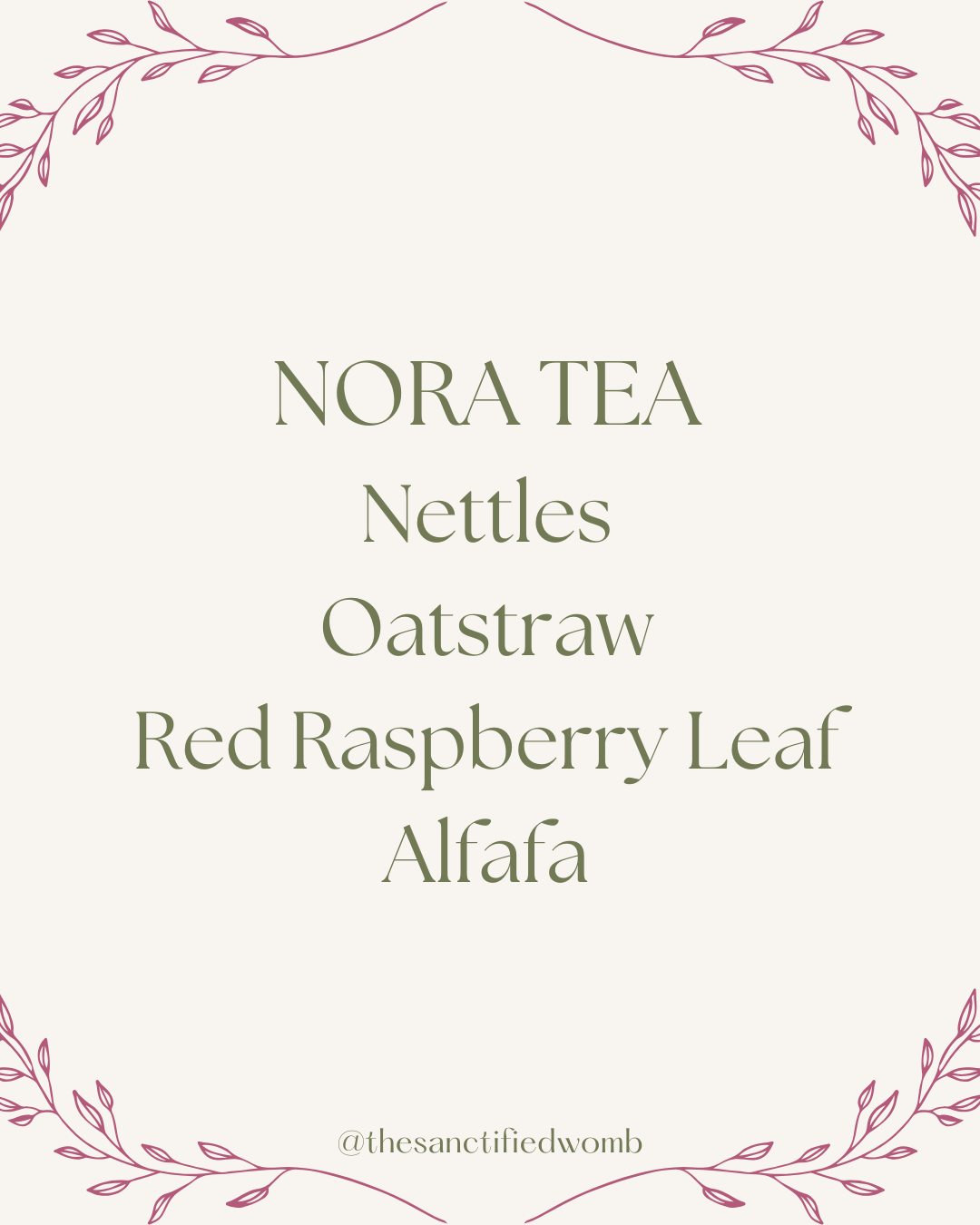
What exactly does NORA stand for? I’m glad you asked. Allow me to break it down for you.
Nettles
Oatstraw
Red raspberry
Alfalfa
Together, these four simple herbs pack a powerhouse punch for support both pregnant and postpartum mamas. Many women who are just supporting their cycles reach for NORA tea because of its incredible medicinal benefits.
Stinging Nettle
Nettle is often referred to as a weed by common culture but revered by herbalists and naturalists for its incredible nutritive benefits. 17
Nettle is composed of:
Iron, magnesium, copper, and potassium, which I’m sure you recall are essential electrolytes required for nearly every bodily function. This means nettle can help balance electrolytes, ease leg cramps, support fetal growth, encourage better sleep, help prevent anemia and postpartum hemorrhage, and aid in the absorption of other essential nutrients.
Vitamin A, B, C, and K, which of course support your growing baby, improve your blood vessel strength and elasticity, support immune health and metabolism.
The chlorophyll and beta carotene found in nettles supports blood volume expansion, blood sugar stability, and lactation.
I personally drink nettle pregnant or not because I have found that it helps with immune support, menstrual cycle and hormone balance, and I simply enjoy the taste.
Oatstraw
Oatstraw is a gentle herb that has a slightly nutty flavor. But there is nothing nutty about its support of a pregnant mama.
The benefits of oatstraw include:
A rich level of iron, magnesium, and calcium, which double up the benefits of nettles
High levels of vitamin D and E, which nourish the pancreas, liver, and thyroid
Aid in hormone balance and help prevent cirulation issues like vericose veins and hemorrhoids
Red Raspberry Leaf
Red Raspberry Leaf is one of the most well known teas in the pregnancy world, and for good reason. Though there isn’t much “scientific evidence” to support its use, it’s one of the many natural supplements that has been passed down through wisdom and women-centric knowledge.
Red Raspberry leaf benefits include:
Rich in many of the same vitamins and minerals found in the previous two teas, but what sets this herb apart are its suspected uterine toning benefits. This translates to more efficient uterine contractions during labor and efficient postpartum involution of the uterus, which prevents hemorrhage.
The scientific research is slim though and what research has been done doesn’t show statistically significant data that red raspberry leaf tea does cause uterine toning.
Alfalfa
Alfalfa is a small sprout that backs a big punch. Gaia Herbs states, “Very few human studies have been done to support the use of Alfalfa as an herbal supplement. But given its impressive nutrient profile and significant anecdotal evidence, it has strong potential to support a range of health benefits, from women’s health to overall health and well-being.” We know this to be the case with many herbs! This tiny plant’s nutrient profile includes: protein, fiber, electrolytes, Vitamins B1, B2, C, K, phytoestrogens, alkaloids, flavanoids, and coumarins.
All of this means alfalfa may benefit:
Balanced blood sugar, blood pressure, and cholesterol
Joint health
Supports natural detox pathways
Blood building, digestion, and a healthy milk supply
How to Prepare NORA Tea for Optimal Mineral Support
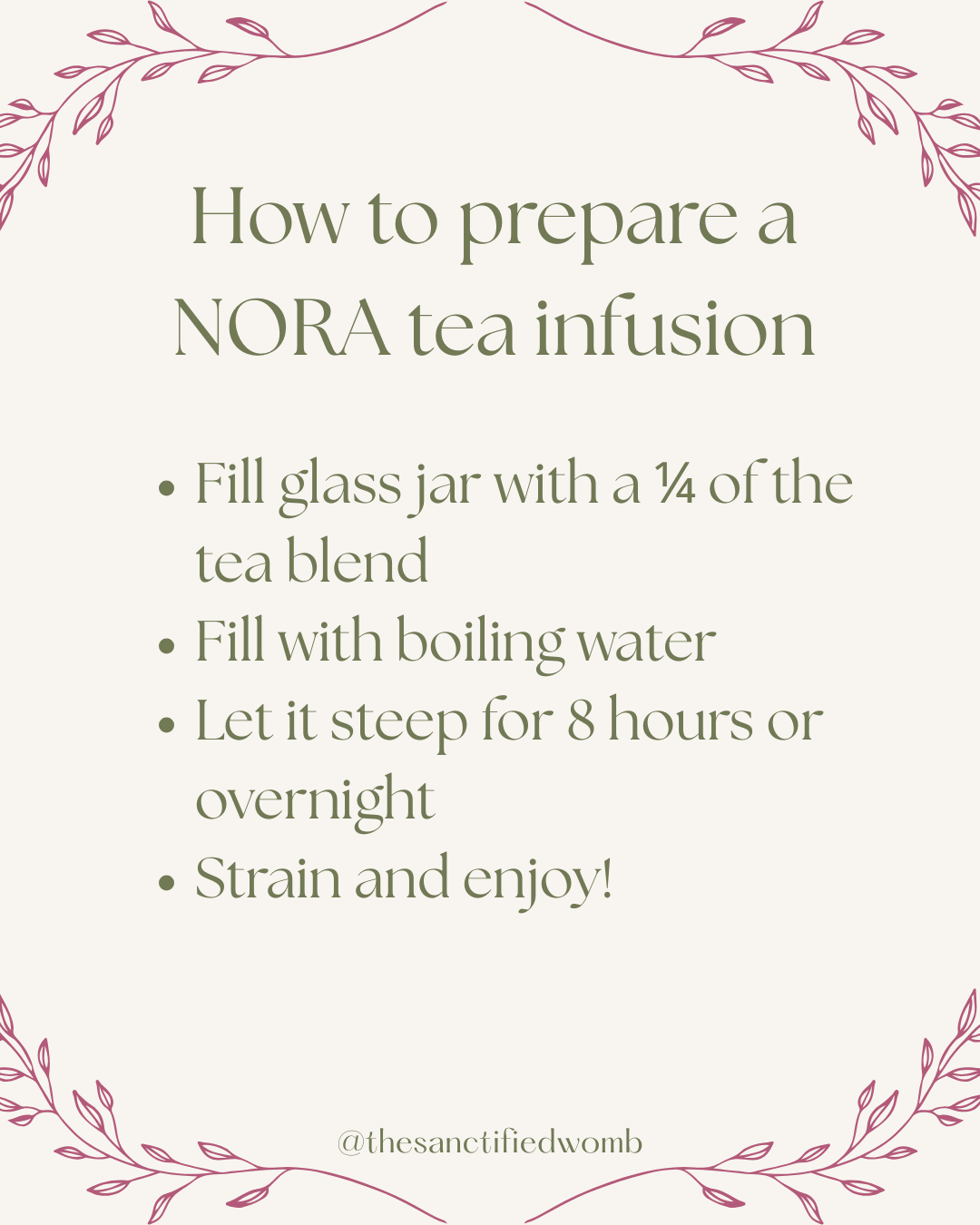
So, now you may be asking yourself, how do I prepare NORA tea? NORA tea is best consumed as an herbal infusion. Rather than simply steeping the tea for 3-6 minutes, which only gets the aromatic benefits of the tea, we want to pull all those lovely nutrients out and use them. Herbal infusions extract the full mineral benefits from the herbs and give your body the best chance at absorbing the nutrients.
When preparing your NORA tea, you’ll want to add a ¼ cup of the mix to a quart size mason jar and then steep for 8 hours or overnight. Then strain and drink. Feel free to add honey, ice, or warm it up. Consume within the day of infusing to get the most benefit.
Personally, I find it easiest to prepare first thing in the morning and then I enjoy the tea as an afternoon pick-me-up. Whenever you find the time to consume this lovely medicinal tea will greatly benefit you and your pregnancy.
Is Nora Tea Really Worth It if There Isn’t a Lot of Research About It?
Optimal mineral levels is crucial to a healthy menstrual cycle, pregnancy, and postpartum. We know that without adequate levels of iron, zinc, folate, iodine, and magnesium, oocyte (egg) quality, implantation, hormonal signaling, and fetal development all suffer. Lily Nichols, RDN, a world renowned prenatal dietician and nutritionist states, “From a nutrition standpoint, electrolytes are just as important as protein, fat, carbohydrates, and vitamins. Without electrolytes (minerals), we wouldn’t be able to get all the benefits of other nutrients.”
While NORA tea may not have enough research to support it as a complete supplement, there is not risk to drinking this tea and there may be benefits that simply aren’t recorded in scientific research.
As with so much of the birth world, we need more research! If drinking NORA tea sounds good to you, tastes good, and fits into your schedule, go for it! If you find other ways to support your mineral intake and well being, go for it. Kelly and Tiffany at Beautiful One Midwifery write many stories of their own clients finding healing and nourishment after consisten use of NORA tea. They say, “You can only run on depletion for so long… eventually your body asks you to choose nourishment or burnout. And pregnancy amplifies that choice.”
The team over at Natural Womanhood states, “Herbs and drugs often have different and sometimes synergistic effects when used in combination with one another. So, although we are able to review the scientific evidence behind each individual compound of NORA tea, we cannot say with certainty what they do in combination with each other— together, they may be more efficacious or more toxic. It is very important to monitor your body’s response when taking any herbs or herbal teas, and to let your clinician know about any herbs you take, as they can influence clinical direction.”
NORA Tea: A Low Risk Option for Mama’s Needing a Nutritional Boost
It shouldn’t come as any surprise that God has given us beautiful herbs to support fertility, pregnancy, and postpartum. He is a wise and loving God who wants us to use creation to His glory. So though you may not find extensive research on the effectiveness of herbs, it can still be a viable option for you. Pray, discuss, and experiment with herbs. There is so much wisdom to glean from other women who have used herbs before you, don’t be afraid to reach out to a trusted friend.
Ultimately, this is a nutritional supplement and afternoon pick-me-up. The choice is yours!
If you found this article helpful, please share with a friend and let me know how you like drinking your NORA tea below.