Time to Ditch the Birth Plan? Try a Birth Map Instead

“This is your fault, you know.”
“What?” I said, as I was propped on my knees, trying everything I could to help my daughter descend so I could still have a vaginal birth.
“You shouldn’t have come in here with a birth plan. Those never work. You are the reason you’re getting ready for a cesarean section.”
After over 30 hours of a non-emergent induction, this is what my nurse said to me as she hung another bag of pitocin. It was my fault I was about to have a C-section because I came in with a birth plan. In reality, I came in knowing what I wanted and didn’t want, and wouldn’t simply sit down and be a good girl doing whatever they wanted me to do. You can read more about her birth here.
Unfortunately, this is how most of the hospital systems in the United States look at birth plans. This doesn’t mean you shouldn’t educate yourself on the procedures and interventions that are available in the hospital birthing system — it’s your birth and your baby’s life that will be impacted by the experience, after all. But there is a better way than just assembling a checklist of “dos and don’ts”. You need to be educated on why you do, or you don’t want an intervention, and when that might change for the benefit of you and your baby. This is why I love the emerging concept of the birth map and not the birth plan.
As a former labor and delivery nurse, momma to five kiddos, and childbirth educator, I firmly believe women need to be educated on all their birth options so they can make the best decision for their situation. But that can only happen when we know what questions to ask and when an intervention might be the next best choice. So, let's dive into the difference between a birth map and birth plan, why it matters, how to set it up, and what happens when we leave room for God’s will to be done.
This article is for educational purposes only.
Some of the links in this piece may be affiliate links. If you choose to purchase through them, I may get a small commission at no extra cost to you.
What is a Birth Plan?
A traditional birth plan is a checklist of do’s and don’ts when it comes to your birth preferences. A simple Google search will give you thousands of templates and customizable lists that run through basic and complex birth decisions. Choices like “I don’t want the lights turned on” to “I don’t want a C-section” are included. See below for a couple of examples.
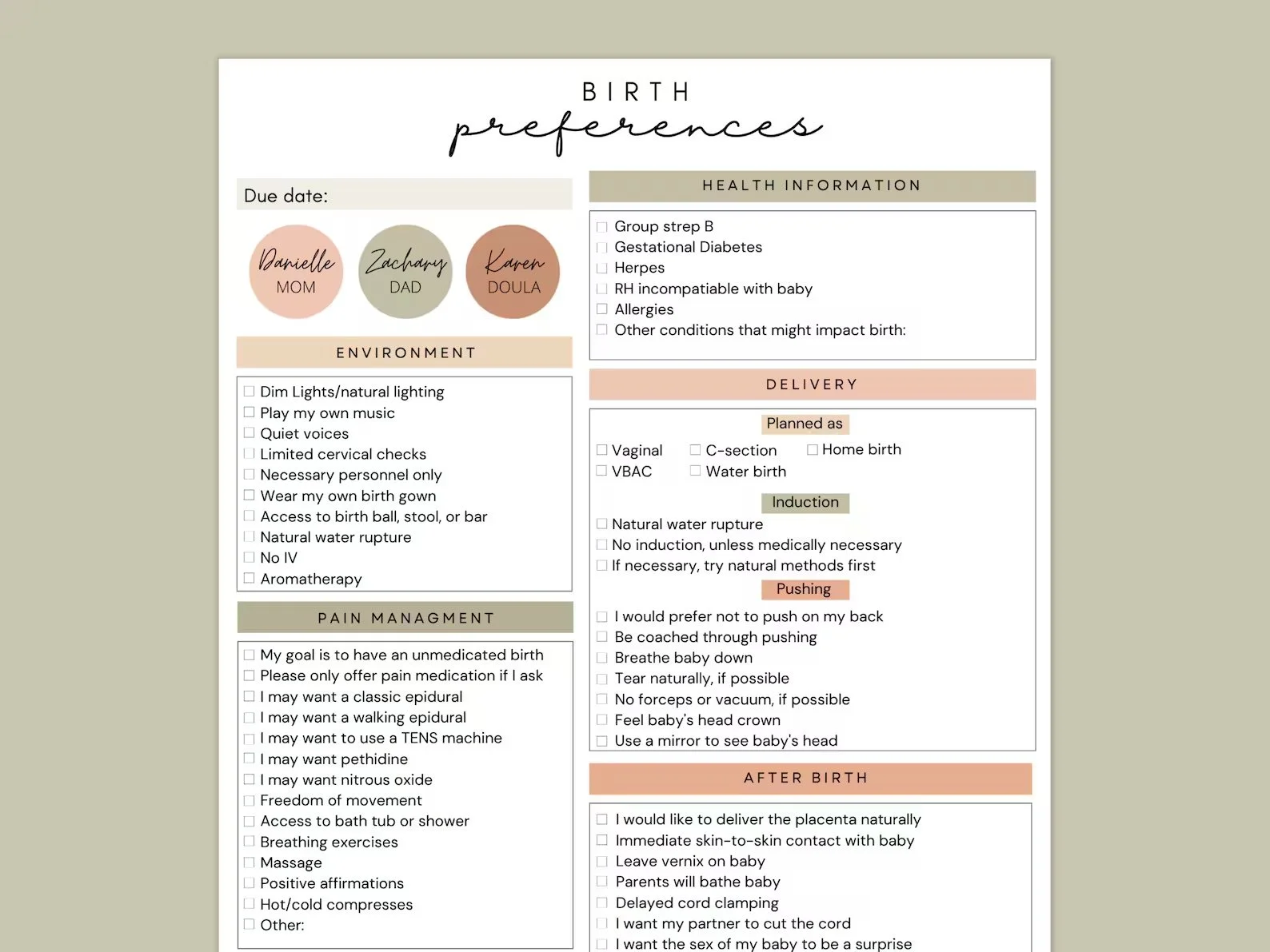
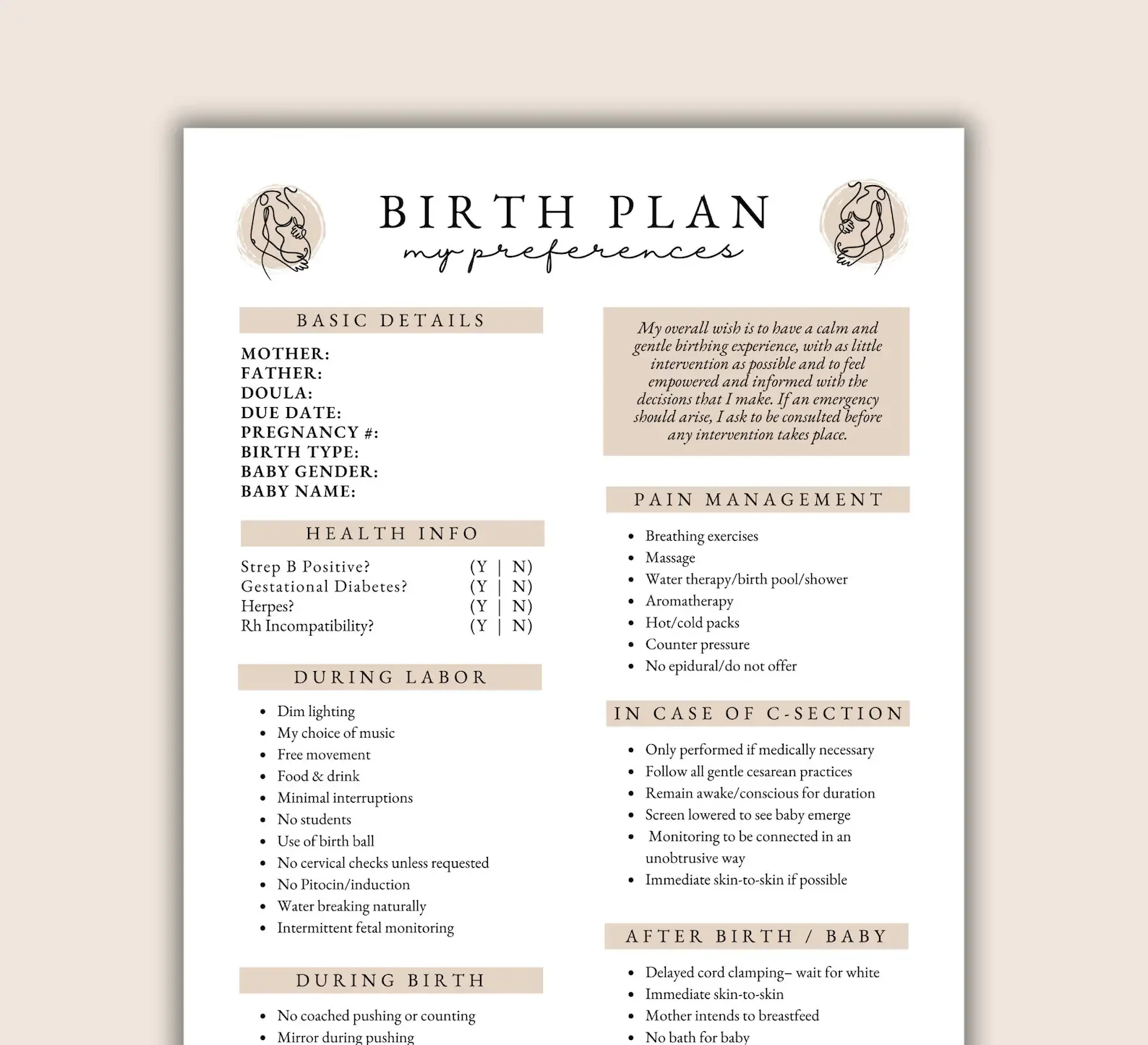
As you can see, it's a simple form that you and your spouse can fill out and bring with you when in labor. Birth plans are most popular in hospital birth settings, but some mothers feel the need for them at a birth center or even home birth.
They are great for starting conversations about where you feel safe and help you consider situations that make you uncomfortable. Unfortunately, most birth plans don’t come with education on why you might say yes or no and when that answer may change. It often makes mothers think that if she doesn’t have a birth that goes “according to plan,” she did something wrong, and this can be very traumatic.
When our choices are either brushed off as unimportant or impossible, it harms how we perceive our birth experience, which has a lasting impact on not only you as a person but how you mother your child. Though you may say I absolutely won’t ever need an epidural because I’m planning a home birth, what if you experience a 47-hour labor and your midwife suggests a non-emergent transfer for an epidural and some sleep? If you don’t consider this before labor, it may be too late in labor to make that kind of shift in plans.
What is a Birth Map?
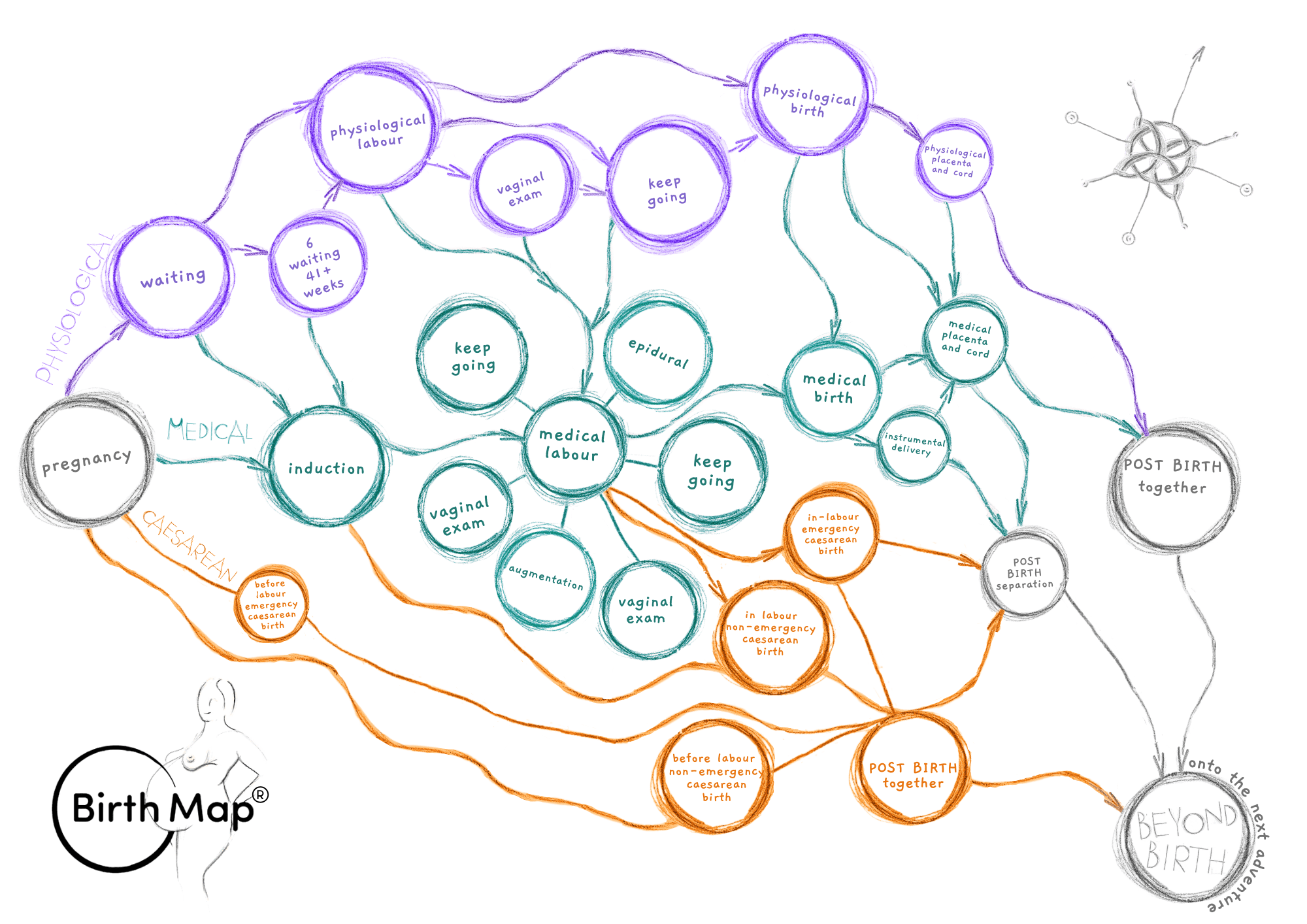
On the other hand, a birth map allows you to consider the many ways your labor may unfold and when and why you might need to change course. Catherine Bell coined the birth map to help women have better conversations with their providers to make confident decisions throughout pregnancy and birth. She states, “Knowing what to ask and being able to ask well in advance means freedom to explore the options. Understanding the various pathways and how they intertwine means the power to make confident decisions.”
Unlike the birth plan, which seemingly sets your course for “the birth you want vs. the birth you don’t want”, the birth map is dynamic and doesn’t make any one birth preference better than another.
One reason I love it, from an Orthodox Christian standpoint, is that the birth map encourages your free will to choose but allows the Holy Spirit to work for your benefit. It allows the opportunity to say, “Lord, I understand the many ways this could unfold. I’d love to have a physiological birth (planned induction, scheduled C-section, etc.), but if that is not for my salvation, lead me and my team.”
How Does the Birth Map Work?
The birth map empowers you to learn about the different interventions and understand them and why they might be useful at a specific point. It can also help you decide which birth location is best for you.
There are endless situations to consider, and you certainly can’t prepare for all of them, but it’s important to know what you’re getting yourself and your baby into. Unlike a birth plan, which simply says yes and no, the birth map encourages you to ask questions and consider when you might say yes or no to a specific intervention or change of course.
Perhaps you say no to induction because you’ve only heard horror stories of how bad they can go. But did you know that there are very valid, medically supported reasons for induction? Perhaps you would confidently choose an induction if it gave you a greater chance of a vaginal birth than a C-section. But you’ll want to explore the risks vs. benefits of induction and know all your options so you can make a confident yes-or-no choice for you and your baby, instead of one based on hearsay or fear.
How to Set up a Birth Map?
If you want to follow Catherine Bell's template for a birth map, you can purchase her game or book, but you can also start with the bullet points below to educate yourself and facilitate what you need to consider well before labor begins. But remember, it’s not just about checking yes or no. You have to be willing to get curious about each point and consider what is best for you and your baby and when you might need to alter course.
This list doesn’t provide context, and each one could be its own article – start your search here or seek other trusted sources; I have a full guide that covers these topics coming soon! But for now, I will link whatever articles I currently have available and update as appropriate
Additionally, I have another article coming on what physiological, induced, and C-section labor and birth may look like as a guidepost if you’ve never experienced labor and birth before. I’ll update the link here and be sure to sign up for my newsletter below to know when that article is published.
Where do you want to give birth? Home, hospital, birth center, friend's house closer to a hospital, etc.
Hiring a doula or monitrice
Rethinking your risk status — if you’ve been told you’re high risk, have you asked why, have you gotten multiple opinions from trusted experts in your specific situation
Monitoring baby for 20-30 min on arrival to hospital
Eating and drinking throughout labor
Wearing a hospital gown
IV/Heplock, or refusing both
Blood tests in labor (blood type, CBC, STI screening)
Vaginal exam on arrival (or by more than one person)
Staying/leaving if you are in early labor, not active labor
IV antibiotics in labor if GBS positive
Continuous monitoring of baby in labor vs intermitent monitoring (or less)
Frequent blood pressure checks
Routine vaginal exams throughout labor (typically every few hours, or more)
Pitocin if cervix is not dilating at the pace expected
Epidural plan (at what point, what if you start leaning towards wanting one, etc)
Nitrous oxide plan
Hydrotherapy, pool in labor
Cesarean section (under what circumstances)
Pushing Position (many providers do not support upright birth)
Starting to push (mandatory vaginal exam to confirm, by both nurse and OB?)
Coached pushing versus physiological pushing
Perineal support, hands on vulva (whose hands?)
Delivering the baby’s shoulders versus spontaneous birth
Who catches the baby?
Drying baby off
Bulb syringe in baby’s nose and mouth (routine with some care providers)
Skin-to-skin
Hat and blanket on baby vs. naked
Active management versus physiological placenta birth
Shot of pitocin at the moment of birth, unless already on IV Pitocin
Immediate cord traction, pulling the placenta out
Cord clamping (immediate, delayed (60 sec), or physiological, after the placenta)
Cord blood collection
Vitals on mom and baby immediately after birth
Baby latching (waiting for them to do it versus pushing baby to latch asap)
Newborn exam (away from you or next to you and at what point)
Antibiotic eye ointment
Hep B vaccine
Vitamin K shot/oral/not at all
Weighing and measuring baby
Baby’s first bath
Circumcision
Checking mom’s perineum for tears, sometimes including a rectal exam
Sutures for any tearing
Sleeping with baby
How long to stay in-hospital post-birth
Newborn metabolic screen (heel poke)
Gentle Cesarean Choices
Epidural vs General anesthesia
No additional meds to “relax more”
Music of choice, no extraneous conversation
Clear drape or lowering the drape as baby is born
Skin-to-skin immediately
Delayed cord clamping
Saving placenta
When you would be comfortable with induction or NOT. When to go in (if choosing hospital birth).
Would you consider a non-pharmaceutical induction, i.e., castor oil, membrane sweep, homeopathy. At what point would you say yes?
Learn about the risks of induction
Water broke
Social reasons (mom is only in town a few more days)
Gestational diabetes
High blood pressure
Membrane sweeps at the end of pregnancy
Breaking water to induce or augment (speed up) labor
Cervadil
Foley bulb
Cytotec
As you can see, there is a lot to learn, and perhaps you’re wondering why you even need to. You have a doctor or midwife, right? Well, yes, but if you want to be able to confidently make the best decision for you and your baby, you need to have some understanding of the interventions and when they may or may not be appropriate for you. Now, I’m not saying you need to do a dissertation’s amount of research, but having a simple understanding will go a long way in helping you make the best decision (notice I didn’t say right decision), when the time comes.
Drawbacks to a Birth Map
Like everything, there are some drawbacks to the birth map. Namely, it takes time to work through. But what better time than when you have quiet evenings thinking about your growing baby? Yes, the birth map takes effort, research, and communication, but you and your baby are certainly worth that time.
Another drawback is that if you don’t have a supportive birth team, your work may be in vain. So this is why I strongly encourage you to interview multiple OBs and midwives until you feel safe and comfortable with their model of care. You hire your provider to be the expert, yes, but also to be a part of your team where you are the primary decision-maker. You seek their guidance, but ultimately, you need to be at peace with whatever intervention or shift in care that happens.
You Can’t Plan the Perfect Birth, but You Can Prepare with the Birth Map
I know what you’re thinking, “They tell me not to plan, social media tells me to manifest, and my heart yearns for God’s providence… how do I know what’s right?” There is no “right” way to prepare for birth. Certainly there are better ways than others, but only you can decide how much or how little you prepare for your labor and birth.
I will always advocate to know your options or you won’t have any. You won’t know why your OB or midwife suggests an intervention or doesn’t. And you won’t be confident in the choices that are presented to you.
You and your baby are the ones who have to live with the outcomes so be confident in each step. And of course, leave room for the Holy Spirit to move and God's will to be done. Listen to your intuition along with the education. It’s not one or the other, you can be educated and confident and still trust God's will to be done.