Gestational Diabetes 101: The Risks, Research, and Real-life Advice

If there’s any pregnancy screening test that most women have heard about, I’d venture to guess it's the gestational diabetes mellitus (GDM) test. The atrocious glucola drink has left many women sick to their stomachs and second-guessing their nutritional choices. While this test may be an important screening for some women, is it necessary for all? Let’s break down GDM, what the risk factors are for developing it, what the test tells us (or doesn’t), and what the risks are associated with a GDM diagnosis.
Much of what the internet has to say can feel hopeless, but rest assured, a GDM diagnosis does not have to ruin your pregnancy. There is still a lot you can do to have a beautiful and healthy pregnancy and birth.
What is Gestational Diabetes?
Gestational diabetes, also known as gestational diabetes mellitus (GDM), is defined as high blood sugar (hyperglycemia) first diagnosed in pregnancy. It may only show up during pregnancy, or it might be preexisting Type 1 or 2 diabetes that has gone undiagnosed until now.
As your placenta and baby grow, they require more nutrients. So your placenta releases the hormone placental lactogen, which causes your cells to be less resistant to insulin, therefore leaving more glucose in circulation for the placenta to use. This is known as physiological insulin resistance, and for most women, it doesn’t cause a problem.
But for a growing percentage of women, their pancreas, which is responsible for insulin production, can’t create enough insulin to accommodate the increased glucose. As a result, your body develops high blood sugar, which can result in complications for both mother and baby.
Until recently, GDM was not screened for. It was only in 1964 that GDM was discovered after the consideration that pregnancy has on carbohydrate metabolism. So, in 1978, the American College of Gynecology (ACOG), formerly recommended screening. Whether or not the standard screening proves accurate or predicts birth outcomes requires further discussion.
What are the Risk Factors for Developing GDM?
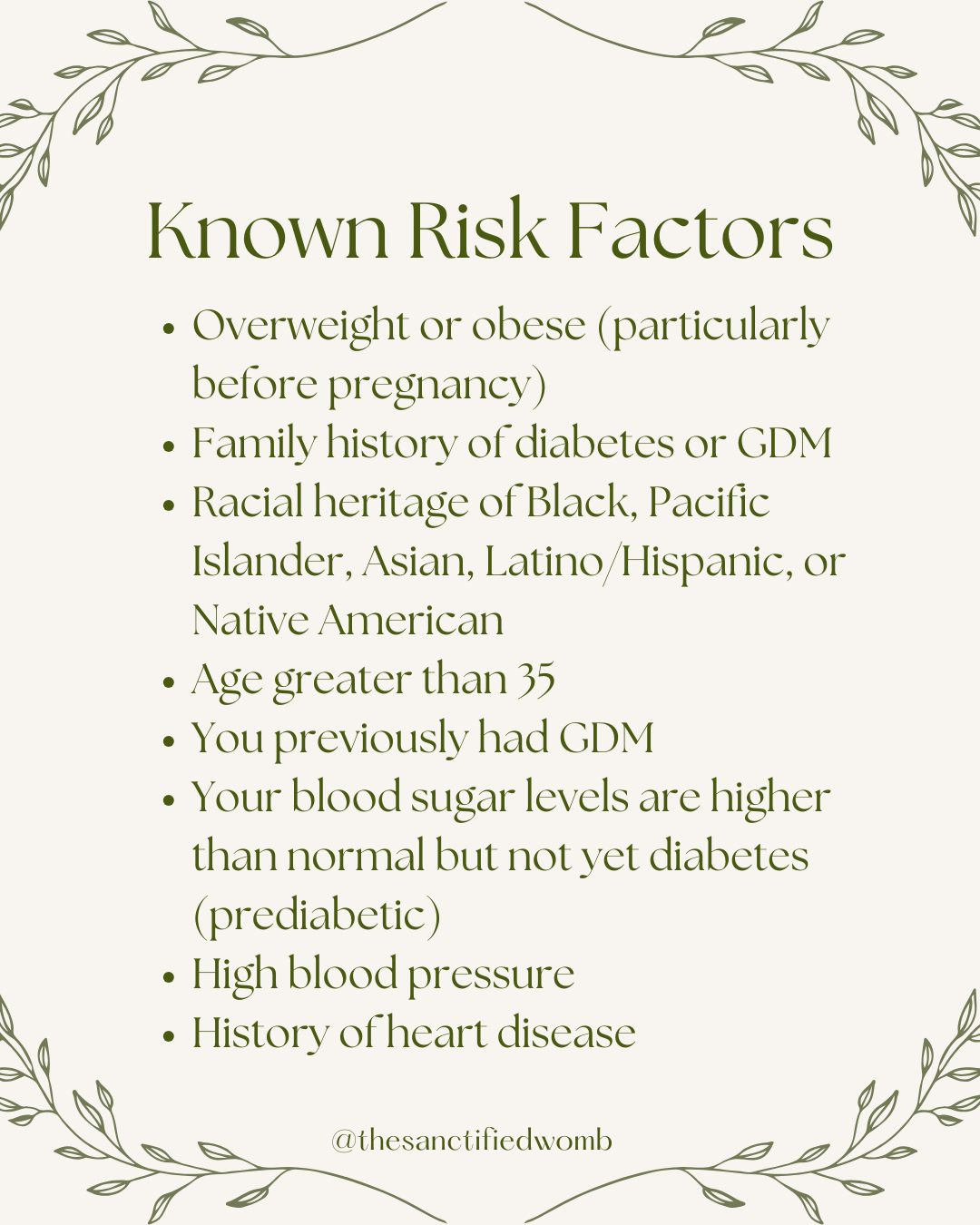
Though there is a lot unknown about the disease, there are some known risk factors.
Overweight or obese (particularly before pregnancy)
Family history of diabetes or GDM
Racial heritage of Black, Pacific Islander, Asian, Latino/Hispanic, or Native American
Age greater than 35
You previously had GDM
Your blood sugar levels are higher than normal but not yet diabetes (prediabetic)
High blood pressure
History of heart disease
Polycystic Ovarian Syndrome/Polymetabolic Ovarian Syndrome (PCOS/PMOS)
Previously had a baby greater than 9-10 lbs (This range depends on which source you cite).
The available sources often have conflicting information. Some sources say being over 25 is a risk factor, while others say 40. Some sources say having a previous baby over 9 pounds, while others say over 10 pounds. Unfortunately, risk factors are not the only area with conflicting information. Some women may have no risk factors and still develop GDM. This is certainly an area that needs better-quality research to understand.
How is GDM screened for?
It’s most common for providers to screen mothers for “late” GDM between 24-28 weeks, regardless of risk factors. However, there is disagreement on which test is best and most accurate. There are two approaches: a one-step diagnosis and a two-step screening-and-diagnostic approach.
The one-step diagnosis is as follows:
The mother must fast for at least 8 hours prior to the test
When at the site for testing (either the hospital or lab facility), blood is drawn to assess the fasting blood sugar level
Then she drinks a 75-gram glucose drink
Blood sugars are redrawn at one and two hours post-glucose drink and evaluated
GDM is diagnosed when one of the following blood levels is observed
Fasting: 92 mg/dL
1-hour: 180 mg/dL
2-hour: 153 mg/dL
The two-step screen and diagnosis is the most common in the United States and Canada. The first step is usually called the “oral glucose challenge”, “50-gram, 1-hour screening test”, or “glucola screening test”. It was first adopted in 1973 to identify women who were at risk of developing type 2 diabetes.
The two-step test is as follows:
The mother comes to the site for testing; she does not have to fast and immediately drinks a 50-gram drink of glucose (glucola) for screening
Blood sugar is drawn after one hour, and levels are evaluated
Generally, if the blood sugar is between 130-140 mg/dl, the woman is required to come back for a second test to diagnose GDM. However, providers may follow their own values and even diagnose GDM if the blood sugar is over 190 mg/dl.
If the blood sugar value is over 130 mg/dL, the woman comes back on a separate day for a 100-gram glucose diagnostic, and blood sugars are tested at one, two, and three hours after the drink
GDM is usually diagnosed when a woman has two or more abnormally high blood sugar readings; some doctors may diagnose with only one abnormal value
Unfortunately, the research we have isn’t clear in which method is “the best” or which results in better outcomes for mother and baby. Dr. Rebecca Decker states, “Overall, the new evidence shows that the one-step method increases the number of people who are diagnosed and treated for GDM, without improving health outcomes.”
Additionally, Lily Nichols, RDN, the leading dietitian and researcher of GDM, states that the above values are too lenient. A blood sugar over 90mg/dL should be considered abnormal, and women should be educated about blood sugar balance far earlier than a value of 140mg/dL. She also talks about the lack of evidence to support the two-step test, because why would you give a woman even more glucose when you already know she can't metabolize a 50-gram dose?
Finally, it’s not uncommon to have false positives because your body simply isn’t used to metabolizing that much glucose in one hour. On the flip side, it’s possible to have a false negative if your body is used to metabolizing large amounts of sugar at one time because you regularly eat a high-carb diet. And for women who are already at risk of developing type 2 diabetes, screening at 24-28 weeks might be too late to prevent developing pregnancy and birth complications.
So, what, if any, are the alternatives to the standard glucose test, and does every woman actually need to be tested?
Alternative Screening Options for GDM
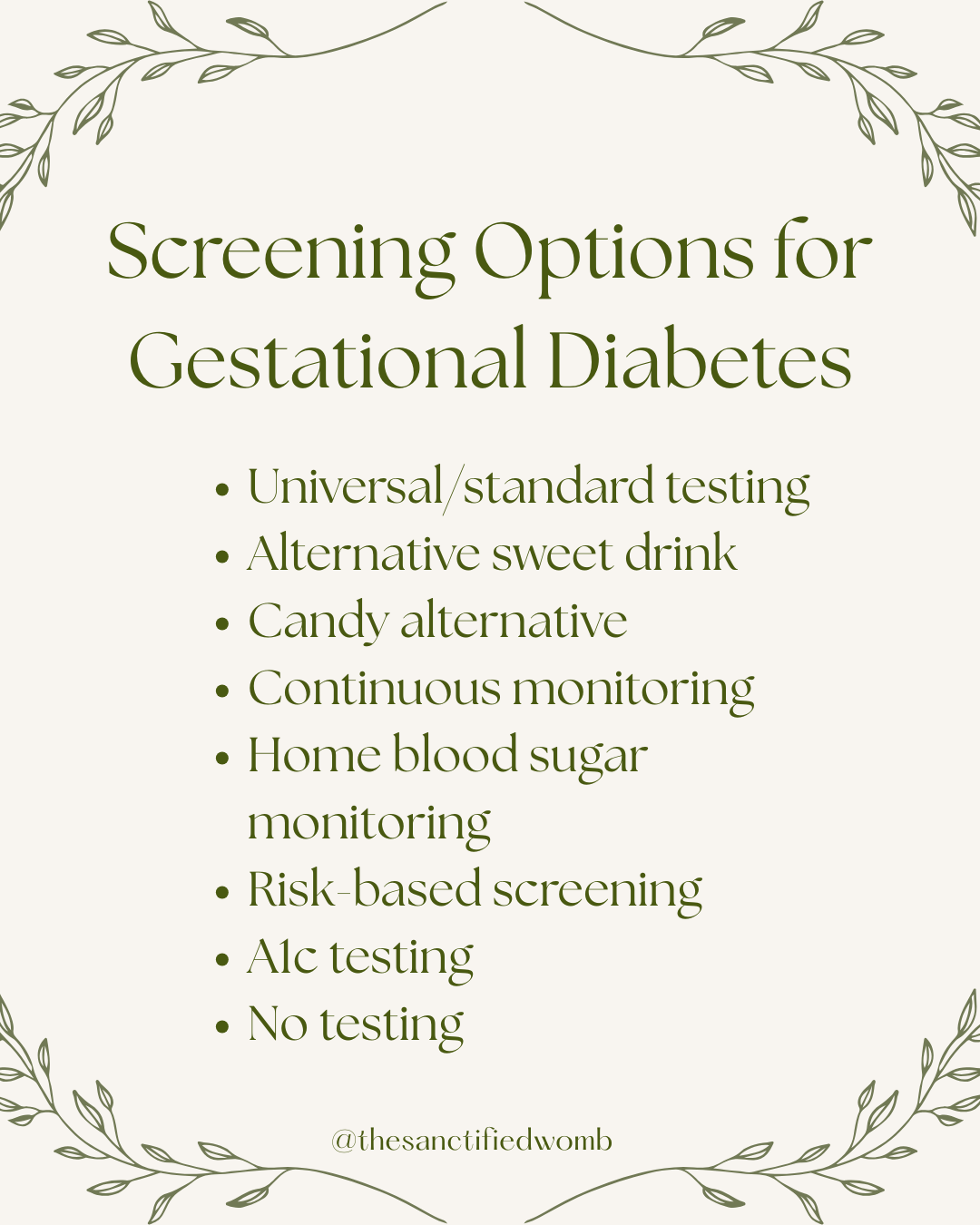
There are a few commonly used alternatives to the glucose drink. The research isn’t clear whether they’re any better or worse than the one- and two-step methods, but they may serve as a good pre-screening tool early on to rule out whether or not a further glucose test is necessary.
Alternative sweet drink
Rather than drinking the glucola, you may opt for another sweet drink like lemonade, a smoothie, or a controlled test called the Fresh Test. Your practitioner will likely tell you how many carbohydrates you need to stay consistent with the glucola test. Otherwise, the testing procedure remains the same with a blood sugar reading before and after the drink.
Candy alternatives
This is as simple as a woman eating a candy bar with 50 grams of carbohydrates in it. There is one Cochrane review which compared it to the glucose test and found that women’s blood sugars were often lower when compared to the glucose drink, which means the test may miss some women who have GDM. But this study was small and didn’t report on the birth outcomes following the alternative test.
Continuous monitoring
If your insurance will cover a continuous glucose monitor patch (or you want to buy your own), you can see real-time blood sugar readings and use that information to assess whether your blood sugars are normal or not. Nichols prefers this test because it gives the most accurate depiction of your blood sugar following exactly what you eat, not an artificial boost of glucose.
Home blood sugar monitoring
Similar to continuous monitoring, you check your blood sugar at home, before and after meals, using a finger prick test. Some guidelines suggest testing for a week, while others record values for a longer period of time.
Risk-based screening
Risk-based testing looks at each woman individually and assesses whether their specific health history and current symptoms warrant further screening. Though the limited study we have looking at risk-based vs. standard screening shows that standard screening is superior to diagnosing GDM and is marked with improved pregnancy outcomes.
A1c Testing
A1c testing assesses your blood sugar level over the prior 3 months to give a bird's-eye view of your blood sugar levels. But there are limitations to this test.
Lily Nichols, RDN, writes, “A1c is less sensitive than a glucose tolerance test or continuous glucose monitoring (CGM) in detecting subtle blood sugar issues. For example, someone with a normal A1c can have dramatic blood sugar swings or excessively high insulin levels. Furthermore, physiological changes in later pregnancy — such as increased red blood cell turnover and hemodilution — can lower A1c values artificially if it is drawn in the second and third trimesters. This is why A1c CANNOT be used as an alternative diagnostic test for gestational diabetes in the second or third trimesters.”
So, the bottom line for A1c testing is that it can be a good tool early in pregnancy but isn’t accurate after the first trimester.
No testing
Like all other screenings and tests in pregnancy, you do not have to take the GDM test if you don’t want to. It is your body and your baby. If you understand the risks and benefits of the test, then you can make an informed decision that is best for your situation.
As you can see, there is no clear standard test, and there aren’t even standard guidelines on how the results should be handled. Nichols emphasizes, “Blood sugar is on a continuum, and the relative risk of complications relies on your blood sugar levels, not a label!”
What are the Risks of Gestational Diabetes?
If you’re diagnosed with GDM, it does not mean you will inherently experience the following poor outcomes, just that poorly managed blood sugars create a higher-risk situation.
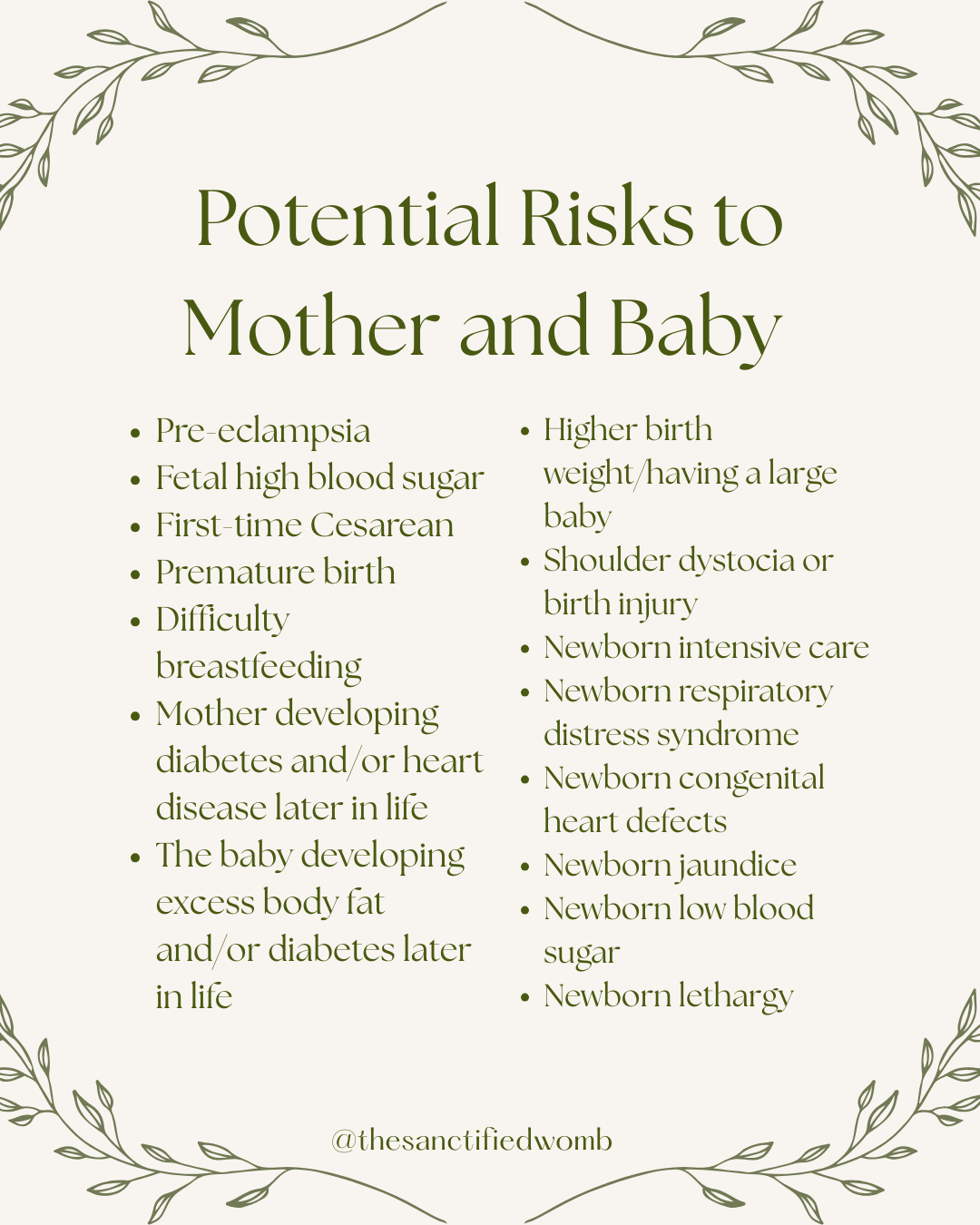
Risks to Mother and baby include
Pre-eclampsia
Fetal high blood sugar
First-time Cesarean
Premature birth
Higher birth weight/having a large baby
Shoulder dystocia or birth injury
Newborn intensive care
Newborn respiratory distress syndrome
Newborn congenital heart defects
Newborn jaundice
Newborn low blood sugar
Newborn lethargy
Difficulty breastfeeding
Mother developing diabetes and/or heart disease later in life
The baby developing excess body fat and/or diabetes later in life
These risks are not to be taken lightly. But there is still a lot you can control, and you are not a failure if you receive a GDM diagnosis. Depending on your birth location, a GDM diagnosis may or may not change your plan of care. Ultimately, if you’re diagnosed, it can be a great opportunity to take a deeper look at your nutrition and take control of your lifestyle to give you and your baby a more positive birth experience.
What Happens if You’re Diagnosed with GDM?
If you are diagnosed with GDM, the first line of action is lifestyle and nutritional counseling. If you’re in the hospital system, you’ll be referred to a dietitian who will give you standard education on diabetes management.
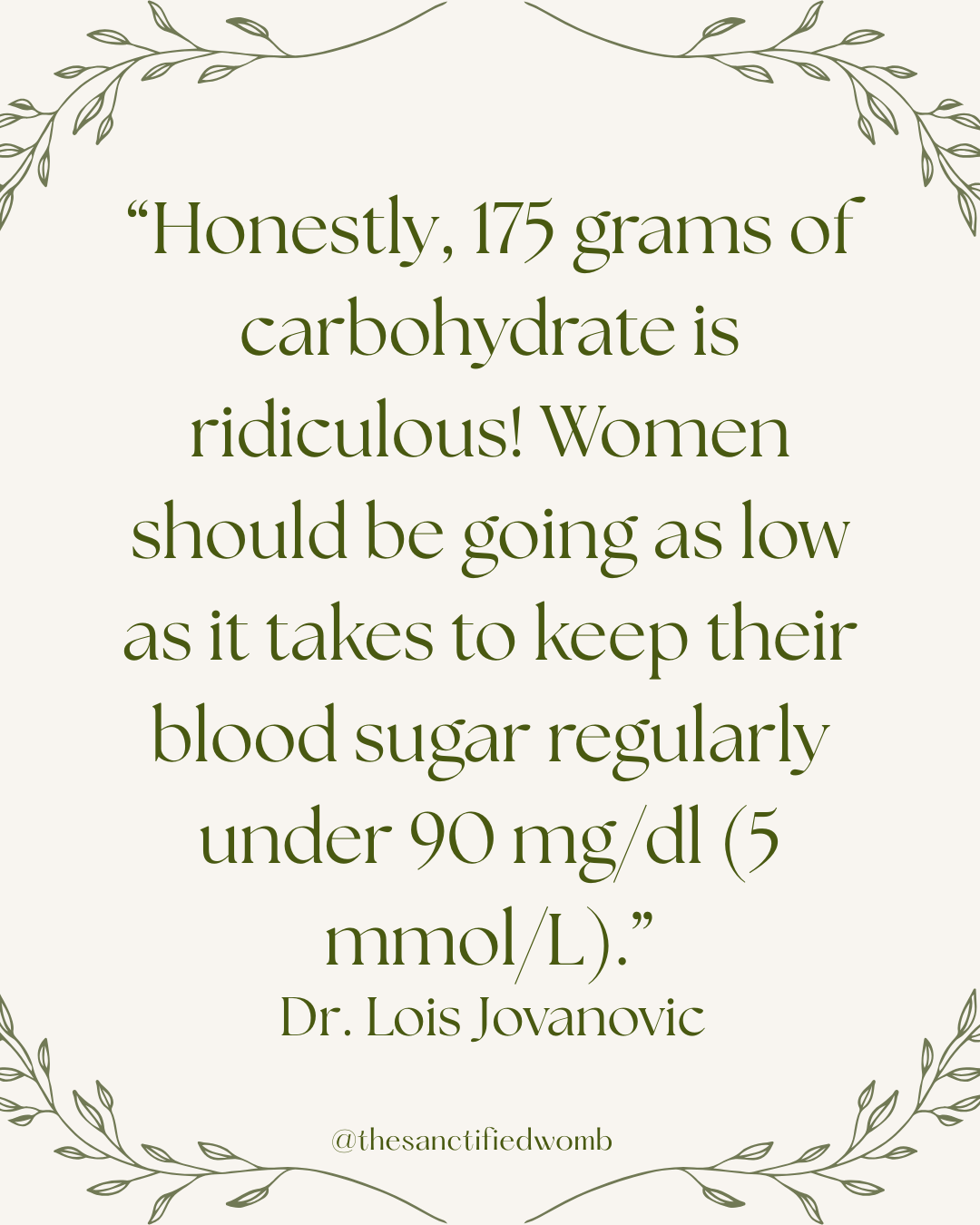
The current guideline for carbohydrate consumption for pregnant women is to eat at least 175 grams of carbs. But this number often results in very unhealthy levels of blood sugar. Both Lily Nichols, RDN, and Dr. Lois Jovanovic are leading experts in GDM care, and they agree that 175 grams is way too high for most women. Dr. Lois states, “Honestly, 175 grams of carbohydrate is ridiculous! Women should be going as low as it takes to keep their blood sugar regularly under 90 mg/dl (5 mmol/L).”
If you can’t manage your blood sugars through your nutrition, you may be offered pharmaceuticals — metformin, glyburide, or another similar medication — or insulin. Because there are no set numbers for when to treat, it will depend on your clinician's policy.
Additionally, if you’re planning a home birth or birth center birth, you may need to change your birth location depending on your contract with the midwife or birth center.
Finally, depending on your medical history and compounding risk factors, your doctor may suggest scheduling an induction. Standard care within the US suggests birth between 39 weeks 0 days and 41 weeks 0 days, though the evidence is not clear on when the best time is to give birth. The consensus is that the timing of birth depends on how well blood sugar levels are managed during pregnancy and any other health complications.
Induction for GDM
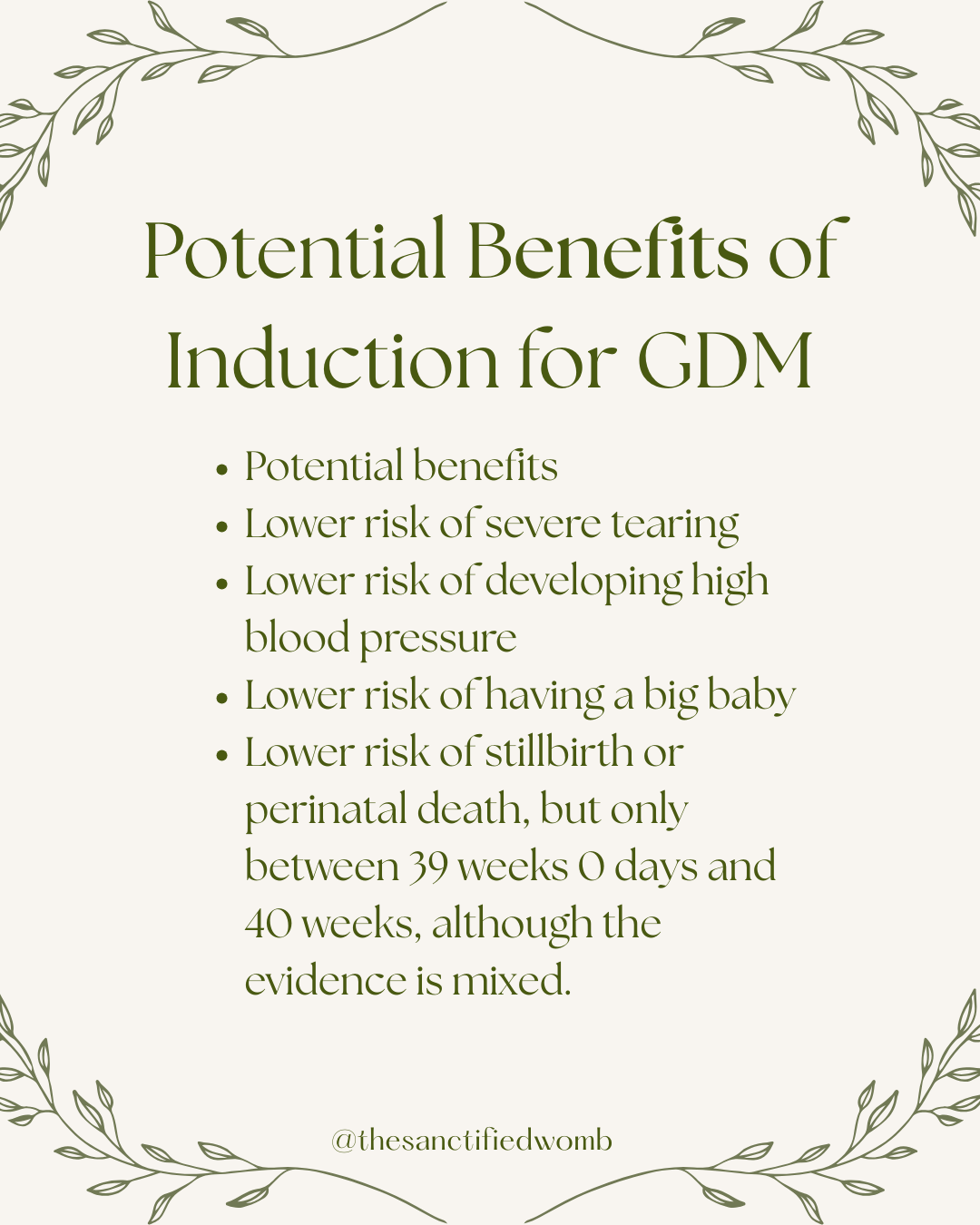
Induction for GDM comes with potential risks and potential benefits, including:
Potential benefits
Lower risk of severe tearing
Lower risk of developing high blood pressure
Lower risk of having a big baby
Lower risk of stillbirth or perinatal death, but only between 39 weeks 0 days and 40 weeks, although the evidence is mixed.
Potential risks
Longer labor
More interventions in labor
It may be more difficult to avoid pain medication because of induced contractions
After 40 weeks, GDM inductions may increase the risk of cesarean sections
Induction before 39 weeks may pose serious risks to the baby, including stillbirth and perinatal death
The main takeaway from the available research is that we don’t have enough quality research to make evidence-based decisions that apply to each woman. But this doesn’t negate the potential risks. Rather, if you are diagnosed with GDM, consider the risks of induction if your situation warrants it.
How to Mitigate the Risk of GDM
As stated above, most of the risks associated with GDM stem from uncontrolled blood sugar. So, you will need to make nutritional choices that support balanced blood sugar. This is not a call to eat only chicken and broccoli. On the contrary, you can eat a full and balanced diet and still maintain good blood sugar balance.
The key to balanced blood sugar is eating protein and fat with every meal or snack like I discuss here. This combination doesn’t spike your glucose and allows your pancreas to do its job properly. Nichols states that although there is the idea that pregnant women must eat a minimum number of carbohydrates, the research doesn’t actually support that claim.
This is even more important for women who notice their blood sugar is affected negatively by eating carbohydrates. Nichols has worked with hundreds, if not thousands, of women who were able to manage their blood sugars through diet alone and went on to have completely normal birth experiences. She is emphatic that a GDM diagnosis is not have to result in negative pregnancy and birth outcomes.
Finally, some women, though they do everything in their power to have stable blood sugars, still require medication. Your body is asking for help, and we thank God we have the resources to manage it. A healthy blood sugar means a healthy body and baby, and that is the end goal for all of us.
Final Thoughts on Gestational Diabetes
Gestational diabetes is a complex disease that can result in some scary outcomes. But, it’s also greatly underresearched which leaves many clinicians and mothers with more questions than answers. Luckily, there is so much you can do to support balanced blood sugars and prepare for a healthy natural birth, if you choose.
If you find yourself facing GDM, I strongly encourage you to read Read Real Food for Gestational Diabetes by Lily Nichols, RDN. It is a wealth of knowledge and research that has benefited thousands of women.
Don’t lose hope, sister, you are made in the image of God and are not alone in this beautiful season of life. Please share this article with anyone who may benefit and sign up below if you’d like to follow along for more articles like this.