Alternative Therapies Through Pregnancy and Why You Might Want to Pursue Them

During my first pregnancy, I knew very little about supplemental prenatal care. I believed that going to my 10-minute OB appointments would be enough to prepare my body for birth and beyond. Unfortunately, I was wrong. Although pregnancy is a natural process, it changes every system in your body, which can come with a host of interesting symptoms.
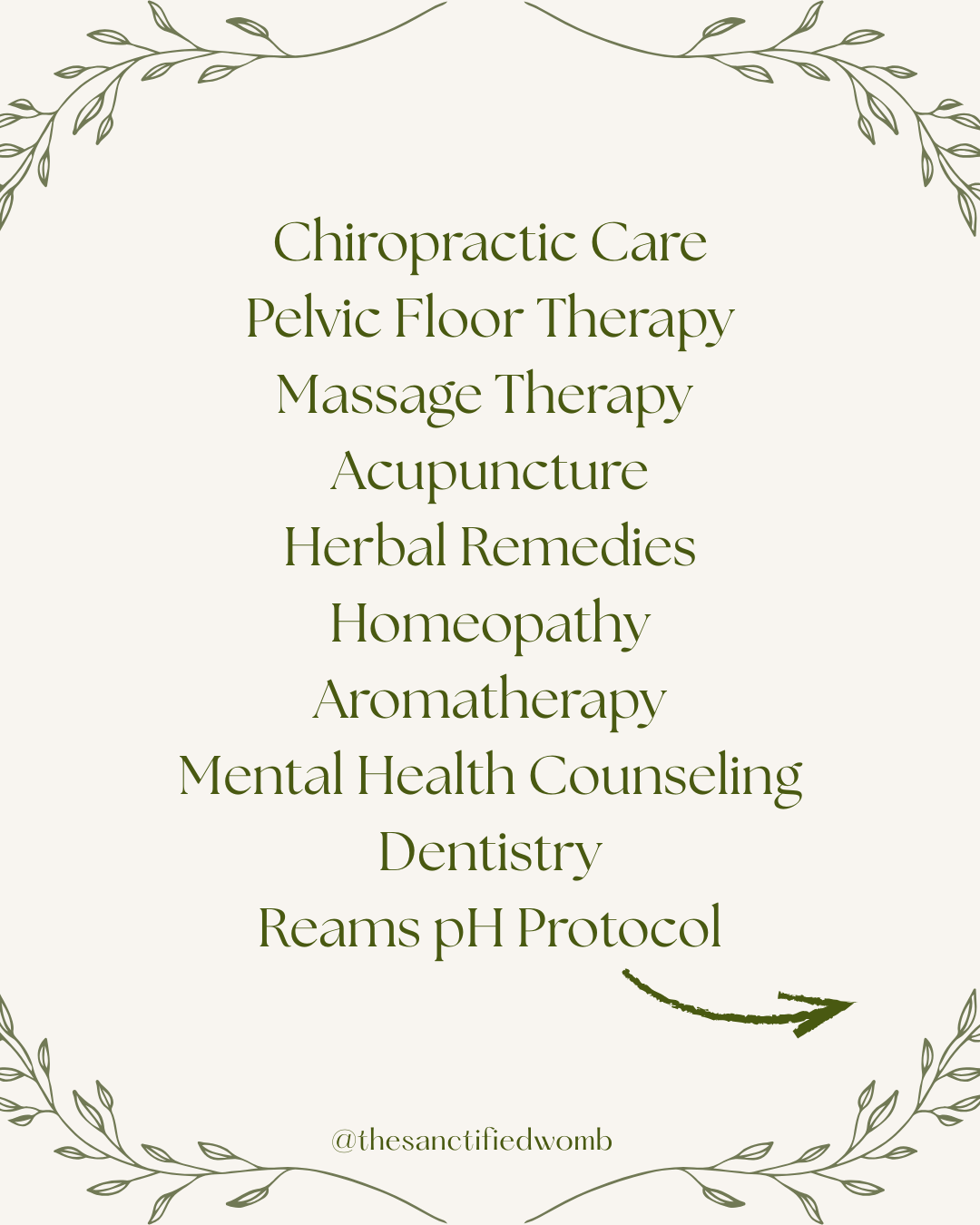
Luckily, there is a lot you can do to support your body (and mind) through these changes. Some of the care I have received during pregnancy includes: chiropractic care, pelvic floor support, homeopathic remedies, tinctures, massage therapy, and mental health support (both through the Church and targeted therapy with my mom, who is a licensed therapist). And that’s just the tipping point!
Some mothers seek acupuncture, hypnosis, herbal therapy, massage therapy, and so many others. With that being said, if you haven’t explored any alternative support yet, allow me to give you a general overview of the benefits and potential risks associated with the most common available.
*This is not medical advice. All information is for educational purposes only.*
Some links on this page may be affiliate links; if you choose to purchase through them, I may earn a small commission at no additional cost to you. Thank you!
Is Alternative Therapy Blessed by the Orthodox Church?
First, I’d love to address the elephant in the room… the Church's view of alternative care. There seems to be a commonly held belief that all alternative therapies are not allowed as an Orthodox Christian, and this simply isn’t true. The Orthodox Church is concerned with “right worship,” and there is very little said about what should and shouldn’t be done for health care.
Care options require discernment and discussion with your priest. Yoga, for instance, is rooted in Hindu worship practices. I personally don’t practice any yoga, but I stretch, do pilates, and make sure my body is physically supported. I’ve heard some arguments against homeopathy because you don’t know how it’s prepared, but you can say that with almost any kind of remedy or even pharmaceuticals.
Ultimately, what it comes down to is prayer and discernment. If you don’t want to try the therapy, don’t! There is nothing you “have” to do to have a good birth, especially if you’re rooted in Christ. Pray with your husband, talk to your priest, and move forward where you find peace.
How Does Each Therapy Work?
We don’t have a lot of research exploring alternative therapies during pregnancy. Most records are anecdotal – personal experiences – rather than double-blind research studies. But this doesn’t mean they don’t work! My biggest piece of advice is to find a practitioner whom you trust and who has an extensive history working with pregnant women. Obviously, you don’t want to take on unnecessary risk to yourself and your baby. So, if you move forward with any of these therapies, research each one thoroughly, interview multiple providers, and only do what you feel 100% comfortable with.
Chiropractic Care
Chiropractic care during pregnancy was a huge part of my second, third, and fourth pregnancies. As I said, with my first, I didn’t know much about it. But when I was preparing for my first vaginal birth after cesarean (VBAC), I wanted to do everything I could to help my body have optimal alignment for birth.
There are many known benefits to chiropractic care during pregnancy, including:
Back pain relief
Nauea relief
Improved pelvic balance
A smoother delivery
Decreased chance of injury – both during pregnancy and birth
Posture support
Improved sleep
Improved postpartum recovery
I would not go to just any chiropractor. I strongly encourage you to find a chiropractor who is well-versed with pregnant women, even better if he or she is Webster Certified. The Webster technique focuses on analysis and adjustment of the pelvis and sacrum in order to bring balance to the pelvic bones, muscles, and ligaments.
Chiropractic care during pregnancy isn’t forceful manipulation. In my experience, it’s gentle when called for and more involved when my body needs it. But I have a chiropractor whom I trust entirely. Don’t be afraid to “shop around” for the right provider.
Pelvic Floor Therapy
Maybe you’re wondering why it’s important to see a pelvic floor therapist during pregnancy and not after. Well, isn’t it best to take care of your health before you get sick? So pelvic floor therapy during pregnancy helps you establish your baseline. Many mothers experience no pelvic floor dysfunction and will only need one appointment to discuss their specific needs for labor, birth, and recovery. While other mothers may already have some pelvic floor dysfunction and will want to have it resolved before it’s more compromised from labor and birth.
Additionally, I would strongly encourage you to see a pelvic floor therapist during pregnancy if you are an extremely fit athlete. Athletes tend to have very tight pelvic floors from years of muscle training and can develop more dysfunction than women who are not athletic.
Whether you’re an athlete or not, if you can’t afford this during pregnancy, then please start saving now so you can have a few sessions after the baby comes.
Massage Therapy
This one may feel like a bit of a luxury, and for most people it is! I have only had a massage during two of my pregnancies, and both times were gifts. I can’t say that I would budget in monthly massage appointments, but that doesn’t mean that’s the case for every woman.
You have to consider your background and needs. If massage therapy helps you relax and find a peaceful hour amidst a stressful life, then perhaps it’s part of your stress management. If you’re struggling with muscle tension and lack of sleep, massage may be what you need to enjoy pregnancy, not just bear it.
It goes without saying, but make sure you find a therapist who specializes in pregnant women and knows how to help this season of life.
Acupuncture
Though I have never tried acupuncture myself, I have heard wonderful things. It’s an ancient Chinese practice rooted in God’s beautiful physiology. Acupuncture needles stimulate nerve endings, releasing neurochemicals such as endorphins, serotonin, and norepinephrine. These chemicals have pain-relieving and mood-regulating effects.
Acupuncture can help with the following symptoms during pregnancy:
Anxiety/depression
Back, hip, and pelvic pain
Headaches
Heartburn
High blood pressure
Insomnia
Nausea/vomiting
Sinusitis
Remarkably, this isn’t just anecdotal! It’s rooted in evidence-based research as well. One meta-analysis study of nearly 1000 women found that Acupuncture is more effective at soothing pregnancy symptoms than Western medicine.
Additionally, acupuncture can help mothers prepare for a smoother labor and delivery.
Herbal remedies
Herbs are one of God’s many beautiful gifts to man. He gave us creation, and in each plant and animal, there is a purpose. Perhaps you’re familiar with herbal teas, or you’ve heard of an herbal tincture, which is becoming commonly talked about. Both of these avenues can safely be used in pregnancy for a myriad of ailments or as part of your birth preparation strategy.
Herbal tea infusions draw out the medicinal benefits of the plant through long steeping. Whereas a 3-5 minute boil brings out the flavor of the tea, infusions harness the full potential of the plant's healing properties.
To make an herbal infusion, you simply take loose-leaf organic tea — my favorite for pregnancy is Red Raspberry Leaf or Stinging Nettle ( more on that below) — put ¼ cup of the tea in a quart mason jar and steep in boiling water for 1-8 hours. Strain off the tea leaves and drink 1-4 cups per day. Store in the refrigerator for up to 4 days.
Tinctures work by concentrating the plant's healing into a herbal extract. Tinctures can be made at home with alcohol or glycerine mediums, or can be purchased from reputable sources like Earthley. Tinctures are great because they’re portable, have a long shelf life, and are simple to use.
I have found great success using both herbal remedies for various pregnancy ailments.
Below is a list of pregnancy blends you might enjoy:
Herbal Tea Infusions
Pregnancy Tonic: Equal parts nettle, oatstraw, red raspberry leaf (after 16 wks), alfalfa Blend
Morning Sickness: 2 parts fresh sliced ginger, 1 part peppermint leaf, 1 part lemon balm
Varicose Veins and Hemorrhoids: 2 parts nettle, 1 part oatstraw
Sleep and Relaxation: 2 parts chamomile, 1 part lavender
Headache and Stress: 1 part basil, 1 part lemon balm, 1/4 part lavender
Cold Care: 1 part elder flower, 1 part peppermint, 1 part dandelion leaf
Heart Burn and Digestion: 1 part chamomile, 1 part dill leaf/seed 1 part peppermint leaf
Herbal Tinctures
Anemia and Fatigue: yellowdock, nettle, and peppermint
Liver Health: Dandelion, burdock, and nettle
Hypertension (high blood pressure): Hawthorn, skull cap, and passionflower
Immune Boosting: Elderberry and echinacea
There are remedies that specifically target labor and birth but I’ll discuss those in another article.
Finally, it’s important to remember that this area is under-researched in the medical community, so tread with caution and make sure you understand the herbs and their modalities before consuming any herbs or tinctures. With that being said, herbs and tinctures can be an incredible tool in your pregnancy and birth tool belt.

Homeopathy
I have reaped the reward of homeopathy for many different reasons through pregnancy. Whether for round ligament pain, pubic symphysis pain, varicose veins, or labor prep, homeopathy is an incredible natural remedy for pregnancy, labor, birth, and beyond.
Homeopathy is a gentle way of using plant essences for their many healing properties. Both of my midwives, who are well-versed in homeopathy, emphasize that homeopathy has zero side effects. It either works with your body as it’s the proper remedy, or it doesn’t.
Homeopathy takes into account both physical and emotional symptoms. A good practitioner helps you navigate both and find a remedy that meets your needs. Once you start to heal, whether it’s nausea, varicose veins, or constipation, the remedy may change because you have changed. That’s why it's important to either follow a detailed manual on homeopathy or hire a practitioner who can help guide you.
Below is a list of pregnancy symptoms that homeopathy may help:
Nausea
Vomiting
Headaches
Swelling
Food aversion
Emotional stagnation
Exhaustion
Heartburn
Varicose veins
Pubic symphysis pain
Round ligament pain
Books to learn about homeopathy:
Homeopathic Medicines for Pregnancy and Childbirth by Richard Moskowitz
The Complete Homeopathy Handbook by Miranda Castro
Homeopathy for Pregnancy, Birth, and Your Baby's First Year by Miranda Castro
Aromatherapy
The smell of fresh bread out of a bread maker will always remind me of the start of Great Lent. My mom would prepare fresh bread for Clean Week, and we would munch on that along with other simple staples for the beginning of the Great Fast. That, in a nutshell, is the power of aromatherapy and can be applied to pregnancy and birth in a variety of ways.
Aromatherapy uses our sense of smell and connects memory and emotion to certain scents. Therapeutic aromatherapy is best achieved with 100% per essential oils that harness the therapeutic agents of plants, similarly to herbal therapies mentioned above.
Though there are a few more precautions for pregnant and nursing mothers, essential oils contain a beautiful way to support your mental, emotional, and even physical health. A 2019 meta-analysis found that aromatherapy use decreased both the length of labor and reduced pain during transition. Additionally, they found no increase to intervention or poor outcomes by using essential oils.
There are many ways to use essential oils throughout pregnancy. For nausea, anxiety, stress, restless legs, aching muscles, and more, reaching for essential oils is a viable option for the mother who wants gentle relief of normal pregnancy symptoms.
The following list of essential oils is safe and found very effective for pregnancy:
Lavender
Chamomile
Patchouli
Sandalwood
Rosemary
Eucalyptus
Neroli
Marjoram
Cedarwood
Citrus (in small doses)
Jasmine
Ylang ylang
Bergamot
Fennel (small amounts)
Rose geranium
Tea tree
Rose
Cypress
Peppermint {safe in pregnancy, avoid during breastfeeding)
Morning sickness: ginger, peppermint, citrus blends
Headaches: lavender, peppermint
Strech mark blend: 80 ml sweet almond carrier oil, 20 ml avocado carrier oil, 7 drops lavender, 5 drops mandarin (or tangerine)
Varicose vein support: 100 ml carrier oil, 5 drops lemon, 5 drops geranium, 5 drops cypress
Aches and pains: Lavender, Ylang ylang, Ginger, Chamomile, Frankincense, Eucalyptus, Lemongrass, Cypress, Geranium
Add a total of 12 drops of essential oils to 2 tablespoons of carrier oil.
Improve sleep: Lavender, ylang-ylang, and mandarin: add a total of 12 drops of essential oil to 2 tablespoons of distilled water in a spray-mist bottle, and mist pillows before bed
When it comes to safety precautions, follow these guidelines:
Do not use oils undiluted on the skin- do a patch test if prone to sensitivities
Discontinue essential oils if a headache, rash, or nausea begins
DO NOT take oils internally. Our bodies are not designed to utilize food or medicines that are so highly concentrated and can cause damage to the liver and kidneys. Oral use can be dangerous, and there is no added benefit over inhalation or application to the skin.
Use only in small amounts- formulas for essential oils are given in drops only, do not exceed the recommended number of drops.
Do not use in or near the eyes.
Use only pure essential oils.
Use only the topical application dilution recommended for pregnancy.
Use extra care on broken or damaged skin.
Use only approved oils for breastfeeding, pregnancy, infants, and children.
Additionally, the following is a list of essential oils to avoid during pregnancy because of increased skin sensitivity and potenial labor inducing effects.
Aniseed
Basil ct. Estragole
Birch
Camphor
Hyssop
Mugwort
Parlsey leaf or seed
Pennyroyal
Sage
Tansy
Terragon
Thuja
Wintergreen
Wormwood
Essential oils are an alternative therapy that have been used for hundreds of years. Their benefits are far-reaching, gentle, and very effective. If you’re looking for a gentle way to ease uncomfortable pregnancy symptoms, consider essential oils.
Mental Health Counseling
I know I’ve said it already, but the changes of pregnancy go far beyond a growing belly. The hormonal changes you experience have a far reaching affect. It’s no wonder that the majority of women discuss how pregnancy affects their mental health.
As your body changes, hormones course through you at levels never felt before. For some, this means you get a glorious content mood, but for others, it brings out anxiety and depression symptoms (among other mental health changes). While some level of anxiety about the unknown is normal, it’s important to recognize that mood disorders don’t only show up in postpartum as postpartum depression (PPD) or postpartum anxiety (PPA).
For mothers who already struggled pre-pregnancy with their mental health, pregnancy hormone fluctuations and changes may influence mental health disorders. If this is you, you’re not crazy, and there is help available. It’s also critical that you work through your fears, traumas, and anxieties *before* birth or they will most definitely show up in some way during the labor and birth process. If you want to read more about mental health support during pregnancy, check out my article here.
Orthodox Christian Association of Medicine, Psychology and Religion (OCAMPR) is an incredible resource for Orthodox Christians to find care providers who can support them through the many physical and mental changes of pregnancy. Start there if you need to find a mental health therapist during pregnancy. Additionally, don’t forget about the power of regular confession with your spiritual father. Confession offers true healing and union with Christ.

Dental Care
It may be silly in a list of holistic alternative therapies to talk about dental care, but it can carry a lot of weight for some women. As your hormones change, there are certain oral health topics to be aware of. The increase in estrogen and progesterone makes you more susceptible to gum disease, known as gingivitis. Additionally, dietary changes and vomiting can change the acidity in your mouth, making you more susceptible to cavities and tooth decay.
One mother told me, “I developed issues with my gums during both my pregnancies that were taken care of by dental treatments, and I would have never known that pregnancy could affect my dental health if I hadn’t gone in for a routine cleaning.”
This goes back to good nutrition, rest, and overall care for yourself. Consider an extra dental exam during pregnancy to have your oral health evaluated. I trust a biological or functional dentist to look at my teeth because they use biocompatible materials and do their best to minimize toxin exposure. But consult a dentist you trust and use the information as you need it.
Reams pH Protocols
One holistic alternative that I recently learned about is pH protocols. One mother I interviewed stated, “As a holistic professional and mother to 6, Reams pH protocols absolutely SAVED me throughout the last 4 pregnancies. Urine and saliva pH are windows into metabolic processes and how well the body is able to assimilate nutrients. If your numbers are off, you may have vitamin and mineral absorption issues regardless of how much of those things you consume. For me personally, it caused breathing difficulties due to low iron absorption, which affected oxygen assimilation, and when I supported those imbalances with the right recommendations, I would always feel immediate relief.” Victoria McAvoy
Essentially, Dr. Reams discusses the importance of keeping your body balanced via the pH scale. When your body is balanced, you are in optimal health; when your numbers are either too basic or too acidic, disease thrives.
It’s an interesting topic of research and discussion! If you’re interested in learning more, a simple Google search can help guide you.
Pregnancy Changes Affect More Than Just Your Reproductive Organs; Consider Alternative Therapies During Pregnancy to Support Your Body, Mind, and Soul
There are many more alternative therapies to consider, but I only have so much space and time with you. Ultimately, I pray this information empowers you to take control of your health, your pregnancy, and birth outcomes. If you don’t like your current plan of care, look for something different! Keep asking questions and seek the care that feels right for you and your baby.